

If you are anything like me, you might have noticed that the social media algorithms think you have low testosterone. Not a day goes by that I don’t see someone telling me that they got up and went because of low testosterone (and therefore to start testosterone replacement therapy – TRT). I have never had my testosterone tested, and to be honest I don’t feel like I have any of the common symptoms. Perhaps I’m just lucky, or maybe it’s something else. While low testosterone, or hypogonadism or androgen deficiency as it is also known, can be associated with fatigue, low libido, increased fat mass, and reduced muscle mass, so can many things. Sleep deprivation, for one, can create a physiological state that provides a reason why testosterone (and other hormones) is deficient. Before trying TRT, it might be worth considering whether lifestyle factors explain the symptom profile rather than reaching for the needle. I am not a medical doctor and do not provide medical advice. I do not want readers to think this article should replace the advice given by a medical professional; far from it. My aim is to open a discussion about factors, like sleep, that we have at our disposal that might reverse some of the symptoms that social media seems to think we all have.
For centuries, artists, philosophers, authors, dramatists, and, more recently, scientists have highlighted the important role that sleep plays in regulating health and well-being. It is not new that a lack of sleep can have significant detrimental effects on a range of physical and psychological systems. Notwithstanding the wealth of evidence linking sleep restriction to cognitive processes, including (but not limited to) memory, learning, emotion regulation, decision-making, and situational awareness, sleep also plays a vital role in supporting endocrine health, physical recovery and development. Several hormones, including Human Growth Hormone (HGH) and testosterone, are selectively secreted during sleep. Therefore, restricting sleep can blunt their release and stall downstream adaptations (i.e., strength, power, hypertrophy, and lean body mass).
For those readers who are not sleep restricted, that is, those people who are consistently getting the amount of physiological sleep that they need (typically between 7-9 hours for a large proportion of the population), attempting to get more sleep will not increase HGH and testosterone beyond a certain level.
Both acute and chronic sleep loss interfere with the orchestration of the endocrine system. These effects are often disconnected from the subjective sensations of fatigue and sleepiness. It is possible that someone could restrict their sleep, feel “fine” the next day, and have impaired HGH and testosterone production. Because of this disconnection between subjective and objective effects of sleep loss, it is important that people recognise the effects of sleep restriction across a range of physiological systems, value sleep as the basis for recovery and performance, and prioritise sleep (when feasible). To help readers do this, this article examines the physiological mechanisms that suppress HGH and testosterone as an example of what can happen when sleep is voluntarily curtailed.
The Role of Sleep Stages
Sleep is not one thing. Sleep is composed of distinct stages that emerge at different times of the night and serve different functions for the brain and body. The sleep stages are in many ways like the macronutrients in your diet. In the diet, proteins, carbohydrates, and fats play specific (often multiple) roles in our health and well-being. If you remove any one of the nutritional macronutrients, you will observe clear effects that reveal some of their functions. For example, removing fat prevents the transport of fat-soluble vitamins, and removing carbohydrates affects energy metabolism. Sleep stages are like macronutrients in that each stage has a function (typically several), and removing stages affects other physical and psychological functions. In the same way that a healthy diet involves a balance across macronutrients, a healthy sleep involves all sleep stages.
Sleep restriction involves shortening the total sleep time or selectively restricting specific sleep stages. For example, HGH secretion occurs at different times of night and is fundamentally associated with slow-wave sleep (aka deep sleep and stage 3 non-rapid eye movement [NREM] sleep). In healthy males, approximately 70% of the daily HGH secretion occurs during the first episode of slow-wave sleep. In a key study on this topic, Van Cauter, Leproult, and Plat (2000) showed that HGH pulses are synchronised with the onset of slow-wave sleep. During periods of sleep restriction, the primary window for HGH release is shortened. The researchers found that a reduction in slow-wave sleep leads to an overall decline in 24-hour HGH levels that is not fully compensated during waking hours.
Testosterone production in males follows a distinct circadian rhythm that is modulated by the sleep-wake cycle. In healthy individuals, testosterone rises at the onset of sleep, peaks during the first episode of Rapid Eye Movement (REM) sleep and remains elevated until waking. Researchers (e.g., Leproult & Van Cauter, 2011; Penev, 2008) have shown that after as little as 1 week of restricted sleep, daytime testosterone levels drop by 10% to 15%. To put this in perspective, natural ageing typically results in a 1% to 2% decline in testosterone per year. Thus, one week of sleep debt could induce the hormonal equivalent of a decade of ageing.
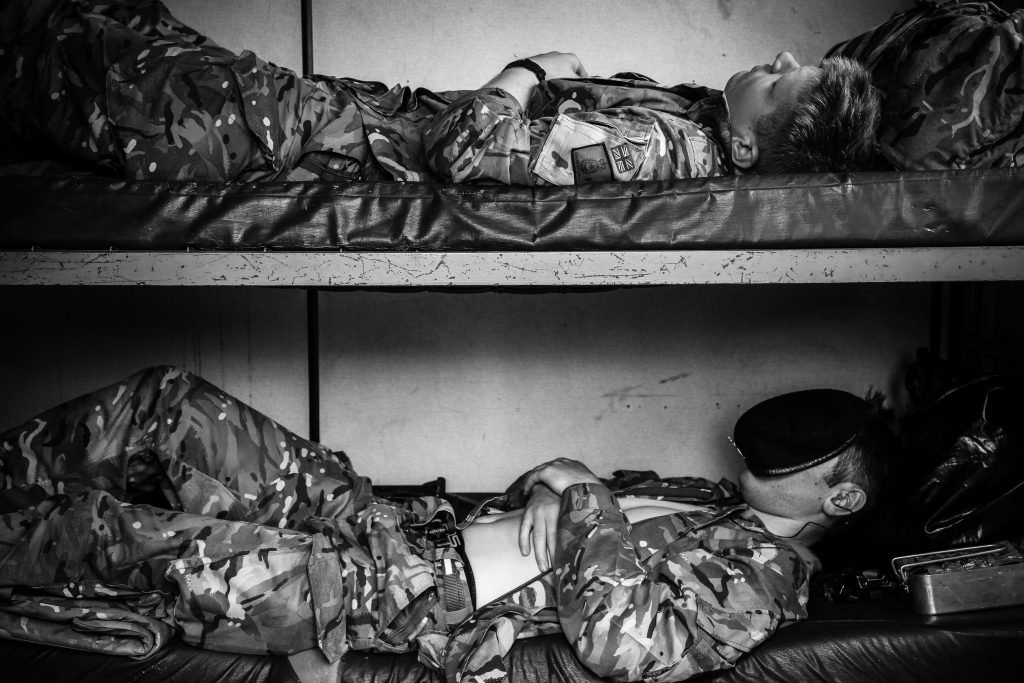
A study with the US Army Rangers (Mantua et al, 2020) found that total sleep deprivation, specifically, operating during the night following a full day of wakefulness, can decrease testosterone even more than that observed during cumulative sleep restriction. Mantua and colleagues reported that a single night of nocturnal training with sleep deprivation could reduce testosterone by 25-30% between baseline and the end of the night mission. Compared with historical data from Rangers who were not sleep-deprived, the testosterone values during sleep loss were approximately 90% lower than expected. These findings have been replicated several times. Su et al. (2021) conducted a meta-analysis of the effects of total sleep deprivation on testosterone concentrations and reported a significant reduction in testosterone after up to 48 hours of total sleep deprivation. Pooled findings from several studies support the claim that removing an entire night of sleep reduces testosterone levels in healthy males. Translated in practice – avoid the temptation to work through the night if you don’t have to.
Why Does Sleep Restriction Blunt Testosterone and HGH?
Sleep restriction reduces testosterone production by increasing cortisol levels that are inadequately cleared. High cortisol levels interfere with the signal from “brains to balls”. Cortisol reduces the sensitivity of specific testicular cells to the signals from the brain that trigger testosterone production. Reduced testosterone also downregulates glucose transporter protein (GLUT4) expression in skeletal muscle, leading to impaired glucose regulation and insulin resistance. Long-term sleep restriction can therefore lead to metabolic dysfunction that influences the risk of diabetes, cardiovascular disease, and other associated comorbidities.
In the case of HGH, sleep restriction triggers a hormonal shift that increases somatostatin activity. When an individual is sleep-restricted, the metabolic demand for glucose increases, interfering with ghrelin and leptin (hormones that regulate appetite and feelings of fullness). This shift increases somatostatin and blocks the pituitary gland from releasing HGH. Sleep restriction also increases myostatin expression, which inhibits muscle growth. Finally, sleep restriction reduces Insulin-like Growth Factor 1 (IGF-1), which influences repair and muscle protein synthesis. Therefore, restricting sleep blunts these processes and halts the body’s natural recovery.
The results of reduced testosterone and HGH can be wide-ranging, but for most men, the obvious consequences are changes in lean body mass and insulin sensitivity. When both hormones are suppressed, the body enters a catabolic state (i.e., a state of breakdown). The combination of low HGH and low testosterone creates a hormonal environment that favours muscle atrophy and increased adiposity (i.e., body fat). Psychologically, low testosterone is strongly associated with elevated irritability, reduced motivation, and symptoms of “burnout” that can sometimes be misdiagnosed as depression.
Aside from the effects of low testosterone previously mentioned, it is worth noting that researchers (i.e., Schmid et al., 2011) reported a direct, linear relationship between sleep restriction and sexual activity. Nocturnal erections are most common during REM sleep. When people reduce total sleep time, there is a disproportionate reduction of REM sleep compared with other sleep stages because REM duration increases in the later stages of sleep. Reducing REM stage duration, therefore, reduces erectile frequency. The unintentional side effect of fewer erections is the overall potential reduction in tissue oxygenation, which can cause erectile dysfunction. Finally, intratesticular testosterone must be significantly higher than the levels in the rest of the body to support sperm production. When overall testosterone is too low due to disrupted sleep, levels eventually reach a threshold at which sperm count and motility are affected (Lateef & Akintubosun, 2020).
Conclusion
Researchers have consistently confirmed that sleep is an essential requirement for male endocrine health. Sleep restriction suppresses HGH and testosterone, which cause meaningful changes in metabolic and reproductive states. Therefore, protecting sleep is an essential way to prevent endocrine disruption that compromises physical strength, metabolic stability, and sexual vitality.
